Apple Finally Puts a Touchscreen on the MacBook Pro
After years of resistance, Apple's new MacBook Pro with a PROLED XDR display brings touch to the Mac, along with a lighter build and a $2,899 starting price.
By News Media House Staff ·
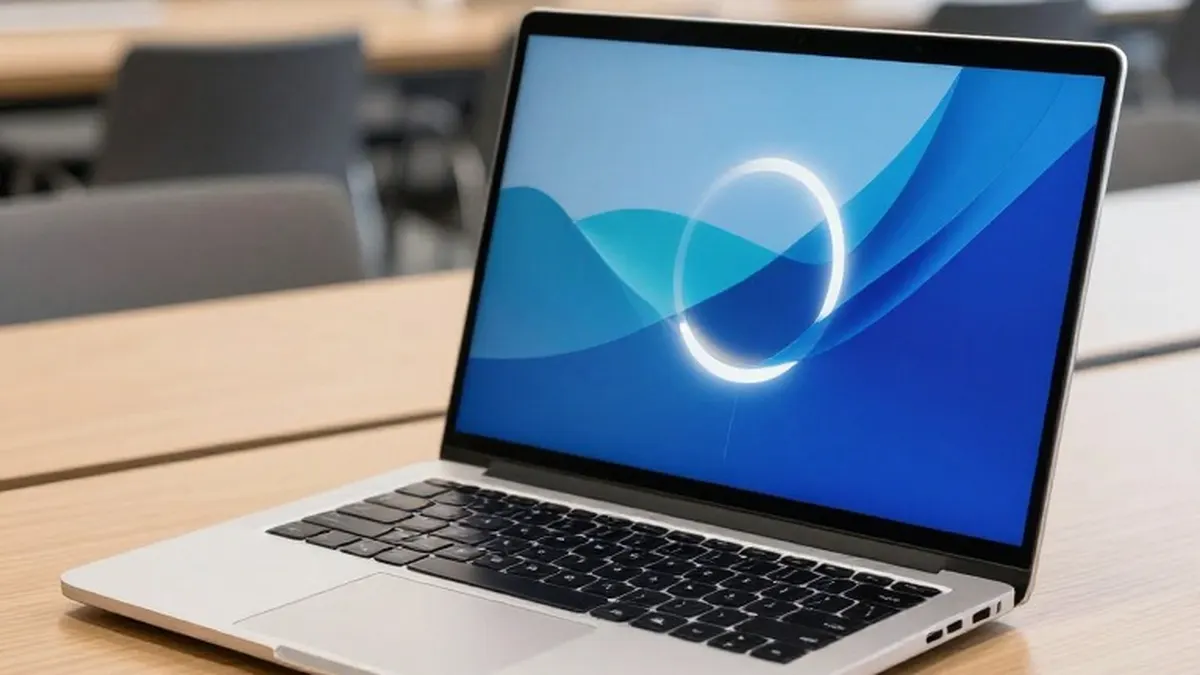
Steve Jobs once described touchscreen laptops as "ergonomically terrible," and for more than a decade Apple held firmly to that view. As of Oct. 28, 2026, the company has changed course with a new MacBook Pro, its first laptop built around a touch interface.
Apple is unlikely to solve every ergonomic complaint tied to reaching up to touch a laptop screen. It has, however, made an effort to make macOS friendlier to touch input.
The new 14-inch MacBook Pro with a PROLED XDR display weighs 3 pounds. That is noticeably less than the current non-touch MacBook Pro line, which starts at 3.4 pounds for the newly introduced M6 models. The gap grows with the 16-inch version, which weighs 4 pounds, compared with 4.7 pounds for the non-touch M5 Pro model. The reduced weight is obvious right away when lifting the 16-inch machine. It still has some heft, but it feels better balanced when picked up by a corner with one hand.
Next to a current 16-inch MacBook Pro, the touchscreen model is slightly thinner and has a marginally smaller footprint. Otherwise, the materials feel the same as those on the MacBook Pros of the past several years.
The glowing Apple logo is also back. It may seem like a small detail, but it drew an enthusiastic response from the audience during the introduction. It also restores a touch of flair to a MacBook lineup that has looked rather utilitarian in recent years.
Touch behaves much as users would expect in Apple's own apps. People can swipe on the screen to scroll through websites, pinch to zoom, and double-tap to maximize a window. Some third-party apps may need updates to take full advantage of touch. They should still be usable in the meantime, because macOS treats taps as clicks when an app has no touch support. Anyone who has tried to hit a tiny button with a fingertip knows how fiddly that can be, and how frustrating it can get.
The touch capability comes at a cost. The touchscreen OLED model starts at $2,899, which is $400 more than a similarly specced M5 Pro MacBook Pro.
This story is still developing.
Originally published by News Media House · Source: The Verge
More News · National news · Report a business · Got a Story?