Rubio Confirms Venezuela Cleared Machado's Return Months Before Her Arrival
The State Department chief revealed the interim government granted permission weeks ago as part of a wider push for judicial reform and a presidential transition.
By Joseph Martin ·
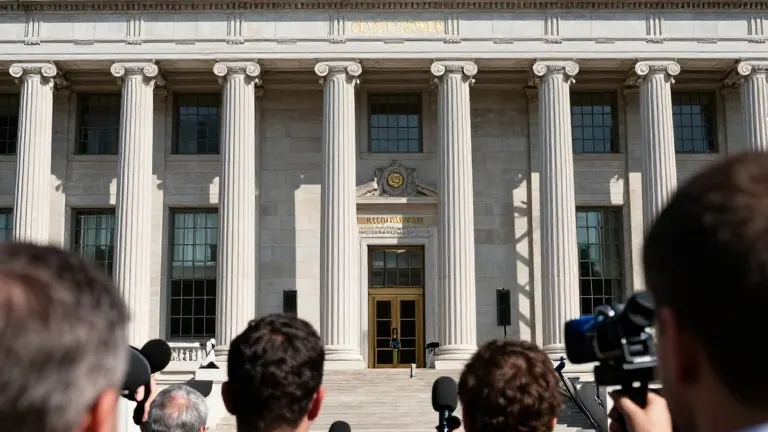
Secretary of State Marco Rubio announced on Monday that Venezuela's interim government granted permission for opposition leader Maria Corina Machado to return home weeks before her recent arrival. Rubio stated that Washington communicated the green light to Machado's team after Venezuelan officials confirmed she could land at the airport without interference. The disclosure came one day after Machado arrived in the country, a move that aligns with the Trump administration's efforts to overhaul Venezuela's judicial and electoral institutions. Rubio argued that these structural changes are prerequisites for holding credible presidential elections.
During his press briefing, Rubio detailed the diplomatic exchange. He said U.S. officials told the interim authorities that Machado is a Venezuelan citizen who belongs in her country. The U.S. requested that she be allowed to return unperturbed. In response, the interim government told the State Department she could fly into the airport if she wished. Rubio emphasized that the U.S. then passed this information directly to Machado's team.
The political transition follows the capture of President Nicolás Maduro by U.S. military forces roughly one month ago. Maduro's deputy, Delcy Rodríguez, now controls the government. The Trump administration has collaborated with Rodríguez on oil extraction and other economic issues. While the U.S. expects a move toward a democratically elected government, no specific election date has been announced. Machado has indicated she may run for president herself, though her path is complicated by the need for institutional reform.
Rubio asserted that the interim government is meeting agreed-upon deadlines for replacing the Supreme Court and the electoral council. He dismissed the idea that Venezuelan authorities would delay elections indefinitely. "You've got to change the infrastructure of the elections, not in 10 years, not in five years, not in two years," Rubio said. He added that these changes need to happen quickly under the established timelines.
The Secretary also cited compliance with U.S. national security demands as a factor in the transition. These demands include diminishing Iranian and Cuban influence, pursuing criminal organizations, and extraditing individuals wanted by American authorities. Rubio noted that the administration can use sanctions relief and economic licenses as incentives for cooperation. He stated that the United States holds significant influence over the direction of these talks and their results.
When asked if Rodríguez and her brother Jorge, who leads the National Assembly, were offered incentives like immunity from prosecution, Rubio said there was definitely no talk about prosecutions. However, he did not directly confirm whether immunity had been offered. Rubio explained that he only personally discouraged Machado from returning once, immediately after a recent event, because the U.S. needed to prioritize humanitarian relief logistics.
Machado has criticized aspects of the administration's economic deals with Venezuela, including an oil agreement. Rubio defended the deal as a way to attract private investment and said her objections were separate from the democratic transition. He warned that failure to reach a negotiated transition could lead to a return to authoritarianism or armed conflict, though he expressed confidence that the interim authorities would continue cooperating.
Source: CBS News